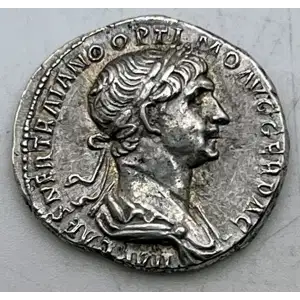
307-308 AD Maximian AE Antoninianus Ticinum Hexa Temple w Statue Roma

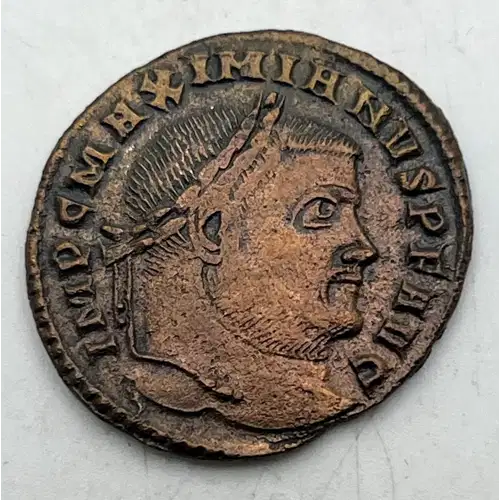
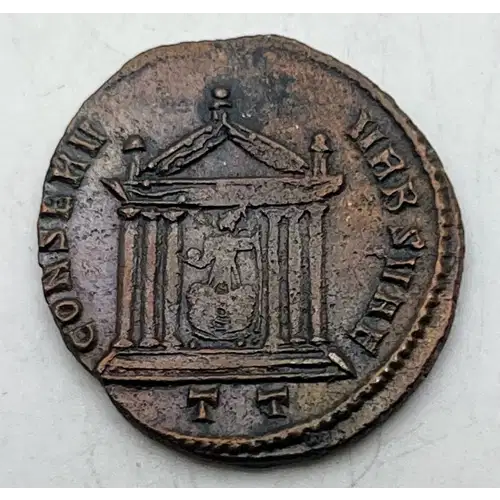
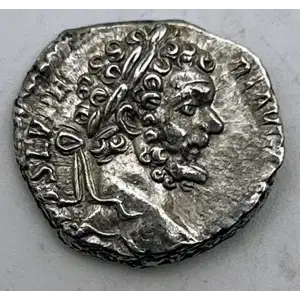
This ancient bronze coin, dating to 307–308 AD, is a striking Roman imperial issue struck under Emperor Maximian at the Ticinum mint. The obverse features a bold, right-facing laureate bust of the emperor, showcasing the thick neck, close-cropped beard, and stern, authoritative profile characteristic of Tetrarchic portraiture. The reverse displays a highly detailed architectural rendering of a classical hexastyle temple with six prominent columns and a pointed pediment adorned with distinct roofline ornaments. Centered within the shrine sits a statuary figure of the goddess Roma, gracefully seated while holding a globe and a vertical scepter. Exhibiting a rich, earthy brown patina and well-centered striking details, this piece stands as an excellent surviving artifact of early fourth-century Roman craftsmanship.  

Product ID 555839
Year 307-308 AD
Mint Mark Ticinum
Strike Business
Grade
Variety -
Grading Agency Raw
Specification properties No
Serial
Status Active
Designation -
Additional Info -

You must be authenticated to write reviews. Click here   to login.

There are no reviews yet. Be the first to write one!

307-308 AD Maximian AE Antoninianus Ticinum Hexa Temple w Statue Roma

Category: 286-305 AD Maximian AE Antoninanus
Credit Card Price
– +

Description

This ancient bronze coin, dating to 307–308 AD, is a striking Roman imperial issue struck under Emperor Maximian at the Ticinum mint. The obverse features a bold, right-facing laureate bust of the emperor, showcasing the thick neck, close-cropped beard, and stern, authoritative profile characteristic of Tetrarchic portraiture. The reverse displays a highly detailed architectural rendering of a classical hexastyle temple with six prominent columns and a pointed pediment adorned with distinct roofline ornaments. Centered within the shrine sits a statuary figure of the goddess Roma, gracefully seated while holding a globe and a vertical scepter. Exhibiting a rich, earthy brown patina and well-centered striking details, this piece stands as an excellent surviving artifact of early fourth-century Roman craftsmanship.  
Specifications

Your Cart


Continue to Checkout