- Gold Au $3857.40 $1.54
- Silver Ag $47.41 $0.40
- Platinum Pt $1436.40 $-15.57
- Palladium Pd $982.00 $10.98
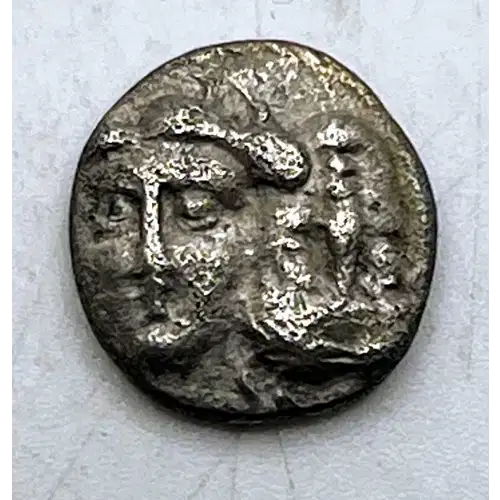
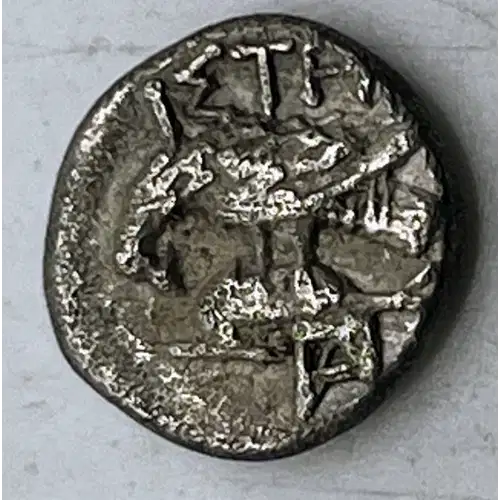
400-350 BC Moesia Istros AR Diobol 1.4g Black Sea 234 Ancient Greek Silver Coin
Category: Greece 450-400 BC AR DiobolDescription
This ancient silver diobol, struck in the Black Sea settlement of Istros in Moesia between 400 and 350 BC, is a classic example of classical Greek fractional currency. The obverse features a distinctive, highly recognizable motif of two young male heads positioned side-by-side facing forward, with the left head oriented upright and the right head completely inverted. The reverse showcases a dynamic maritime emblem depicting a large sea-eagle facing left, firmly grasping a curved, downward-facing dolphin within its talons. Struck on a compact, slightly irregular silver planchet, this piece exhibits significant surface porosity, a rough, granular texture, and a dark, mottled greyish-brown patina indicative of heavy crystallization and environmental exposure over the millennia.