- Gold Au $3856.00 $0.00
- Silver Ag $47.41 $0.40
- Platinum Pt $1434.00 $-17.97
- Palladium Pd $980.50 $9.51
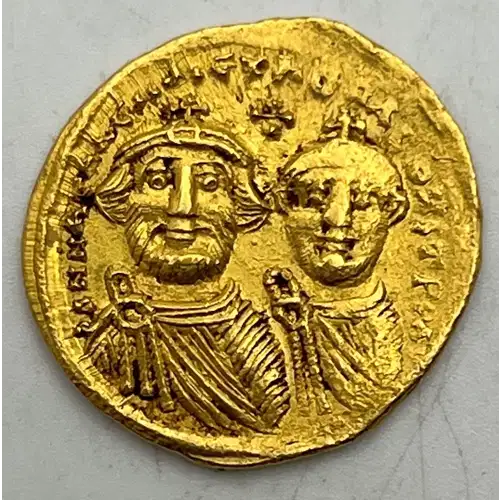
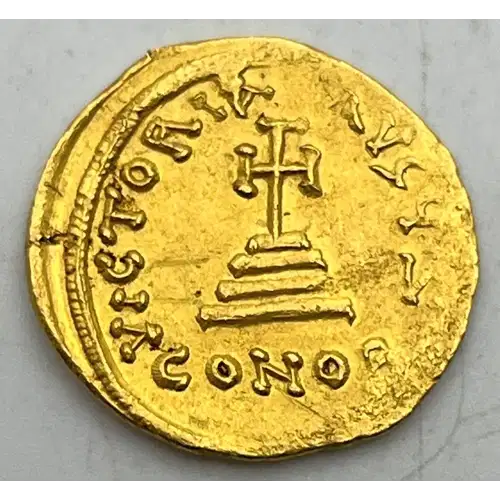
610-641 AD Heraclius w Heraclius Constantine AV Soldius 7th Officina 4.48g
Category: Byzantine AD 610-641 AV Solidus HeracliusDescription
This ancient gold solidus, struck between 610 and 641 AD during the reign of Byzantine Emperor Heraclius alongside his son and co-emperor Heraclius Constantine, is a beautifully preserved example of early seventh-century Byzantine imperial coinage. The obverse features two forward-facing imperial busts positioned side by side, with the larger, bearded figure of Heraclius on the left wearing an elaborate crown and richly decorated imperial robes, while the younger Heraclius Constantine appears on the right wearing a simpler crown and ceremonial garments. Both emperors are depicted with distinctive facial features and finely engraved clothing, emphasizing the continuity of imperial authority and dynastic succession. The reverse showcases a prominent cross potent standing upon a three-stepped base, a traditional Christian symbol representing the religious foundations of the Byzantine Empire. Struck in gold with a weight of 4.48 grams and attributed to the seventh officina, this piece exhibits attractive circulated preservation with sharply defined imperial portraits, prominent reverse imagery, and rich golden surfaces displaying brilliant yellow-gold highlights and subtle warm undertones. The coin's distinctive early medieval craftsmanship and impressive gold composition make it an outstanding example of Byzantine imperial currency from the reign of Heraclius.