Published by
Joe Palmieri
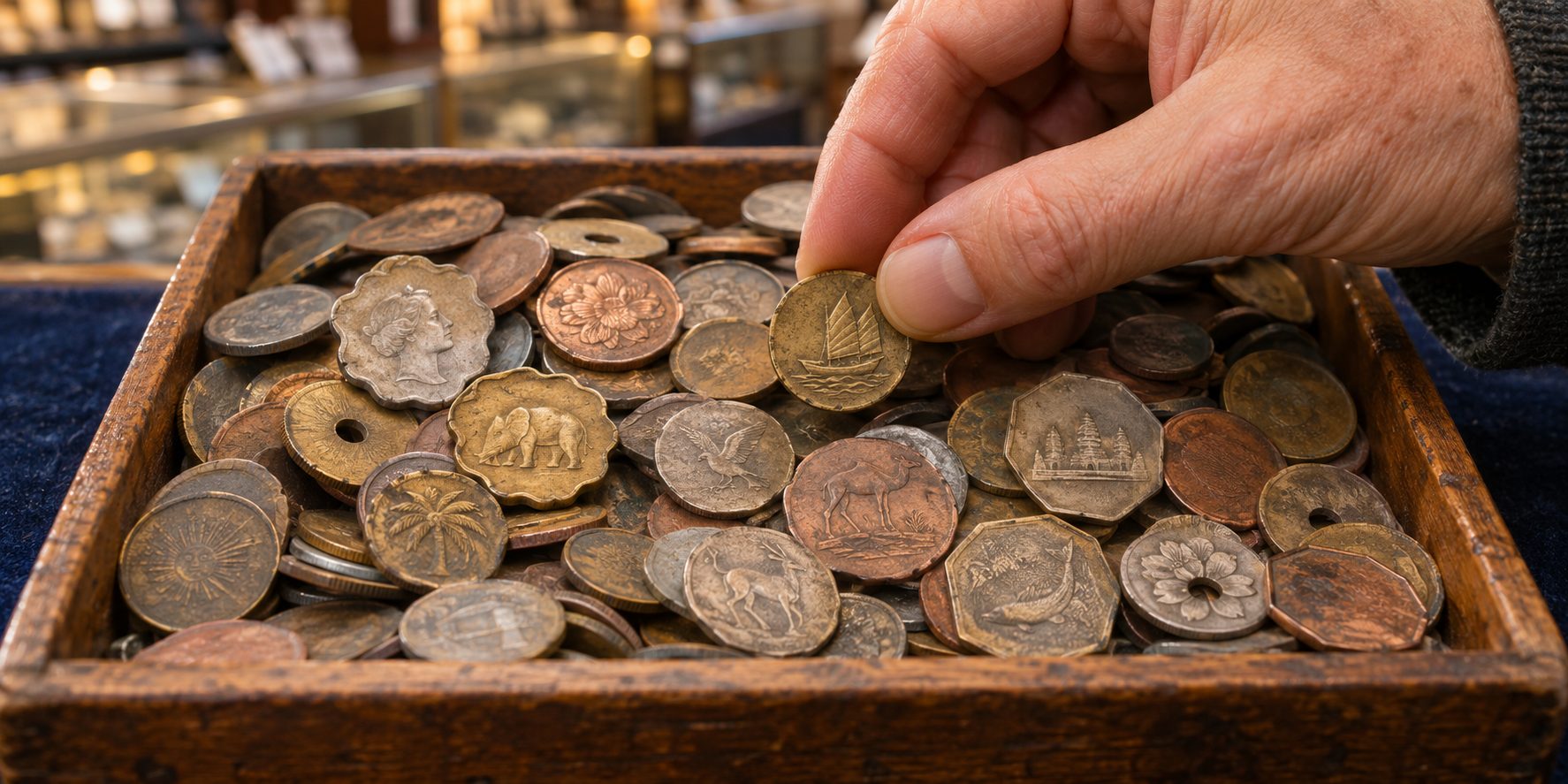
World poundage assortments are a fantastic way to dive into international coin collecting without breaking the bank. They're packed with common coins from around the globe, spanning decades and countries, and they're perfect for beginners, educators, or anyone building a diverse collection.
If you have bought world poundage or enjoy going through it, you might stumble upon "better dates"—those scarcer years or mint marks that can fetch a premium. In this post, we'll explore some of the most common coins you'll encounter in world poundage lots and highlight a few standout dates worth watching for. Whether you're sorting through a fresh pound from our shop or adding to your hoard, this guide will help you spot potential gems. Let's jump in!
What Is World Coin Poundage?
World coin poundage refers to unsorted bulk lots of foreign coins, typically sold by the pound. These mixtures are usually accumulated through someone's travels, or from a world coin collection that eventually makes it to a coin shop, and include coins from Europe, Asia, Africa, Latin America, and beyond. They're not graded or cherry-picked, so you get a true grab-bag experience. At our shop, we curate these lots to ensure a good mix, but the real fun is in the discovery.
Common themes in these lots:
- Post-WWII Era Coins: Many from the 1950s–1990s, as these were mass-produced and circulated widely.
- Defunct Currencies: Think Pre-Euro coins from countries like France, Germany, Italy, and Spain.
- Everyday Denominations: Pennies, cents, pfennigs, and other small change dominate, but you'll occasionally find higher values like shillings or pesos.
While most are worth face value or a few cents each, certain dates, conditions, or compositions (like silver content) can elevate their worth. Always check for silver—pre-1960s coins from many countries contain it, adding melt value.
Common Coins You'll See in Poundage Lots
Based on what walks through our doors and what our customers report finding, here are some staples. These make up the bulk of poundage assortments:
- Canadian Cents and Nickels (1900s–2000s) Canada is a neighbor, so their coins flood U.S. markets. You'll see plenty of bronze cents from the maple leaf series and nickel five-cent pieces.
- Better Dates to Hunt: Look for 1925 cents (key date, can be worth $20–$100 in good condition) or 1926 and 1948 nickels (scarce, $5–$50). Pre-1967 pieces often have silver content in higher denominations, but cents are mostly copper.
- Mexican Pesos and Centavos (1900s–1990s) From our southern border, these are abundant, with bold eagle designs. Older ones might have silver.
- Better Dates: 1947–1949 5 pesos, or 1921 2 pesos (key revolutionary issue, $20–$100). The 1968 Olympics commemoratives can pop up and are worth $5–$20.
- Australian Pennies and Shillings (Pre-Decimal, 1910s–1960s) Kangaroos and emus galore—these are fun for animal lovers.
- Better Dates: 1930 pennies (famous key date, $100–$1,000+ if genuine) or 1915 H shillings (scarce, $20–$200).
- Other Global Mix-Ins:
- Italian Lire: Post-WWII aluminum coins; key dates to keep an eye out for in the 50 lire and 100 lire series (minted from 1954 to 1989) is 1958 for the 50 lire, and the 1955 for the 100 lire. Also, the scarcest types are 1965 for 10 lire and 1956 for the 5 lire.
- South Korea: South Korean won coins are extremely common, but keep an eye out for the earlier dates from 1966 and 1967. They are worth much more than the later won coins, especially in uncirculated condition.
- Japanese Yen: Modern 1–500 yen; watch for 1870s Meiji era stragglers ($10+).
- South African Rand: Kruger-era pieces if lucky ($5–$50 for better dates like 1892).
- Indian Rupees: British colonial or post-independence; 1911 "pig" rupees are notable ($20+).
Tips for Spotting Better Dates in Your Poundage Haul
- Sort by Country and Denomination First: Group them to easily check dates against references like the Krause World Coins catalog.
- Condition Matters: Even common coins in uncirculated state can be worth more. Look for luster and minimal wear.
- Silver Hunters: Use a magnet—non-magnetic means potential silver. Weigh them; silver coins are denser. You can also search on Numista to look up the coins when in doubt of its metal content or value.
- Resources: Apps like PCGS CoinFacts or NGC's World Coin Price Guide are great. It’s also important to check eBay comps for current market trends. Stop by our shop for free appraisals—we love helping identify finds!
- Rarities Alert: While poundage is mostly commons, errors like off-center strikes or wrong planchets can appear. If something looks off, it might be valuable.
Why Shop Poundage at Beantown Coins?
Our world coin poundage is hand-selected for variety and quality, ensuring you get a mix that's educational and exciting. Prices start at just $15 per pound, or $40 for 3 pounds. Plus, if you find a better date, we'll buy it back or trade up to rarer pieces from our inventory.
Coin collecting is about the stories behind the metal—each coin has traveled the world before landing in your hands. Next time you're in, grab a pound and start your adventure!
Beantown Coins & Jewelry
Buy. Sell. Trade. Appraise.