1838-1858 Japan 2 Shu Tenpo Nishukin Gold .298 Silver .702 C-18 Samurai Coin

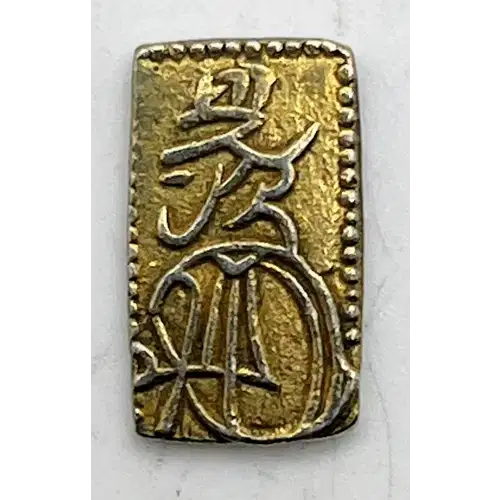
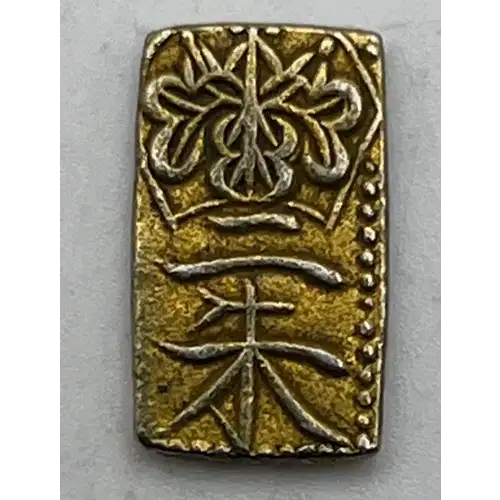
This 1838–1858 Japanese 2 shu, known as a Tenpō Nishukin, is a distinctive example of nineteenth-century Japanese gold coinage issued during the late Edo period under the Tokugawa shogunate. Cataloged as C-18, this historic denomination circulated during the age of the samurai, when Japan maintained a sophisticated monetary system consisting of gold, silver, and copper currency. One side features an elaborate raised paulownia crest, the traditional emblem associated with Japanese governmental authority, positioned above the denomination represented in stylized Japanese characters. The opposing side showcases the distinctive official mint signature of the Kinza gold mint, rendered in flowing calligraphic characters and accompanied by decorative beaded border elements. Struck in an alloy of approximately .298 fine gold and .702 silver, this piece exhibits attractive circulated preservation with sharply defined Japanese characters, prominent ornamental details, and the characteristic rectangular shape of traditional Japanese coinage. The surfaces display a rich golden-yellow appearance with subtle amber and warm brown undertones, complemented by darker accents nestled within the recessed designs, creating an appealing contrast that emphasizes the coin's distinctive craftsmanship and historical significance as a monetary issue of feudal Japan.

Product ID 556012
Year 1832-1858
Mint Mark
Strike Business
Grade
Variety -
Precious Metal Weight 0.00000 ozt Gold
Grading Agency Raw
Specification properties No
Serial
Status Active
Designation -
Additional Info -

You must be authenticated to write reviews. Click here   to login.

There are no reviews yet. Be the first to write one!

1838-1858 Japan 2 Shu Tenpo Nishukin Gold .298 Silver .702 C-18 Samurai Coin

Category: JAPAN Gold 2 SHU (Nishu Gin)
Credit Card Price
– +

Description

This 1838–1858 Japanese 2 shu, known as a Tenpō Nishukin, is a distinctive example of nineteenth-century Japanese gold coinage issued during the late Edo period under the Tokugawa shogunate. Cataloged as C-18, this historic denomination circulated during the age of the samurai, when Japan maintained a sophisticated monetary system consisting of gold, silver, and copper currency. One side features an elaborate raised paulownia crest, the traditional emblem associated with Japanese governmental authority, positioned above the denomination represented in stylized Japanese characters. The opposing side showcases the distinctive official mint signature of the Kinza gold mint, rendered in flowing calligraphic characters and accompanied by decorative beaded border elements. Struck in an alloy of approximately .298 fine gold and .702 silver, this piece exhibits attractive circulated preservation with sharply defined Japanese characters, prominent ornamental details, and the characteristic rectangular shape of traditional Japanese coinage. The surfaces display a rich golden-yellow appearance with subtle amber and warm brown undertones, complemented by darker accents nestled within the recessed designs, creating an appealing contrast that emphasizes the coin's distinctive craftsmanship and historical significance as a monetary issue of feudal Japan.
Specifications

Your Cart


Continue to Checkout