Published by
Joe Palmieri
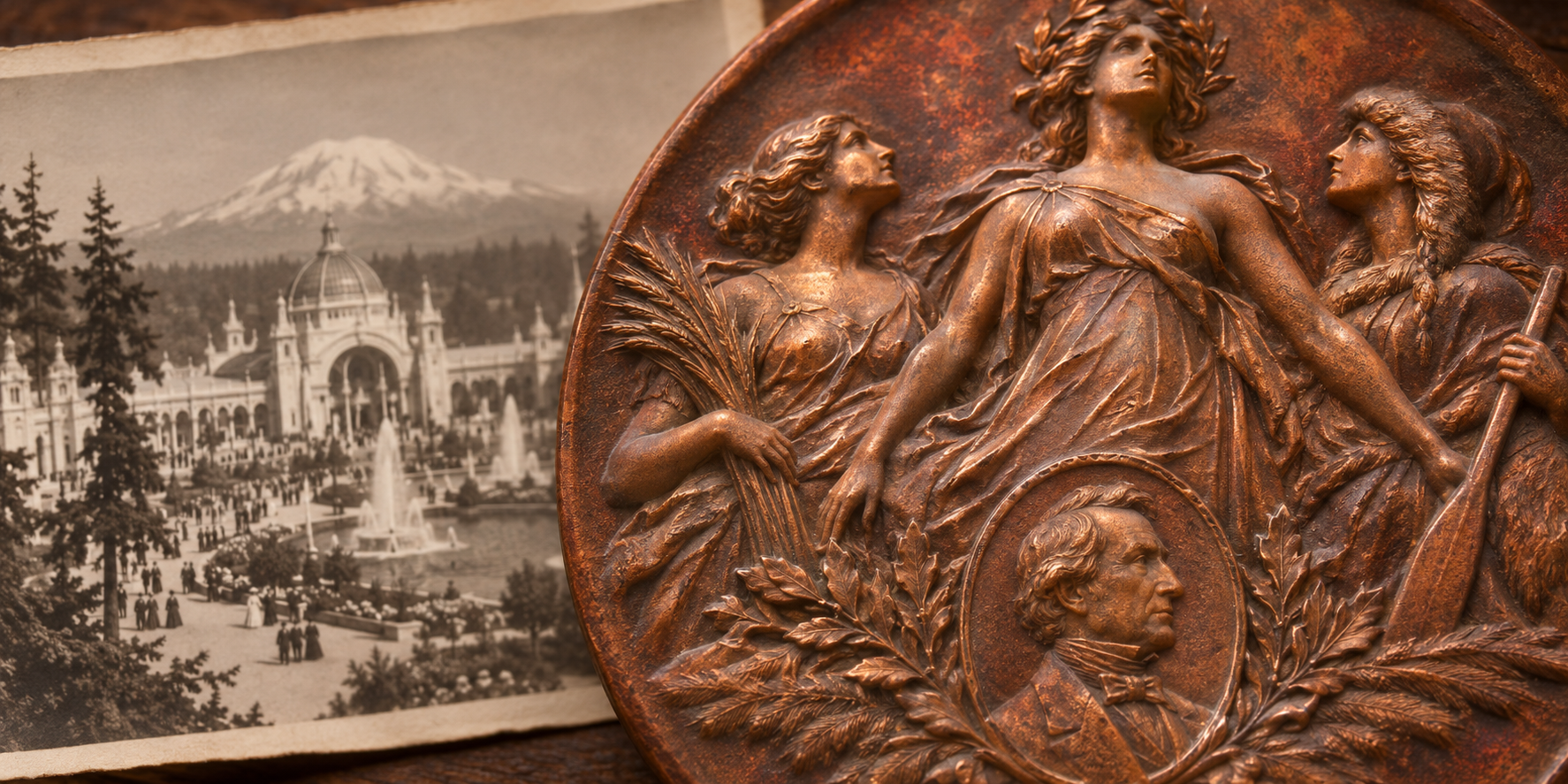
In the world of numismatics, few items capture the spirit of early 20th-century American optimism quite like the so-called dollars from the great expositions. These aren't your standard circulating coins but commemorative medals—often sized like silver dollars—that celebrated innovation, exploration, and regional pride. Among them shines the 1909 HK-355, a copper beauty tied to the Alaska-Yukon-Pacific Exposition (AYPE) in Seattle, Washington. Graded MS66BN by NGC, this particular specimen isn't just a relic; it's a portal to an era when the Pacific Northwest dreamed big under the shadow of Mount Rainier. Let's dive into its story, design, and why it's a must-have for collectors today.
The Grand Stage: The Alaska-Yukon-Pacific Exposition of 1909
Picture this: It's 1909, and Seattle is buzzing. Just over a decade after the Klondike Gold Rush transformed the city into the "Gateway to the Klondike," local boosters hatched a plan to showcase the region's riches. The AYPE, held from June 1 to October 16, was no small affair. Spanning nearly 200 acres on what is now the University of Washington campus—bordering Lake Union and Lake Washington—it drew over 3.7 million visitors. Funded by a mix of city, county, state, and federal dollars (including $600,000 from Congress), the expo celebrated the "enormous value of Alaska" and Seattle's rise as a Pacific powerhouse.
The fairgrounds were a marvel: grand pavilions from states like Utah and California, a U.S. Mint exhibit, and even a Forestry Building made from a single massive log. It was a follow-up to the 1905 Lewis and Clark Centennial Exposition in Portland, timed to avoid clashing with the 1907 Jamestown Tercentennial. Themes of progress, from Alaskan gold to Pacific trade, filled the air—along with the scent of fresh-sawn timber and midway treats. But amid the spectacles, small copper (and silver) medals like the HK-355 served as affordable souvenirs, encapsulating the event's essence in a pocket-sized format.
Decoding the HK-355: Design and Rarity
Cataloged in the seminal So-Called Dollars by Harold E. Hibler and Scott Kappen (1963), the HK-355 is one of 23 varieties struck for the AYPE—making the expo a hotspot for these exposition medals. This copper version measures about 32mm in diameter, weighing in at roughly 12 grams, with a reeded edge for that authentic coin-like feel.
The obverse features the official seal of the exposition: three allegorical female figures representing Commerce, Agriculture, and Mining, cradling a bust of William H. Seward (the U.S. Secretary of State who orchestrated Alaska's purchase in 1867). Encircling them is the inscription ALASKA • YUKON • PACIFIC • EXPOSITION. It's a nod to the territory's untapped potential—Seward's "folly" had become a goldmine.
Flip it over, and you'll find the Seal of the City of Seattle in the center: a Native American chief (inspired by Chief Seattle) flanked by George Washington and Abraham Lincoln, symbolizing the city's pioneer spirit. Surrounding it: THE SEAL OF THE CITY OF SEATTLE, with 1909 at the base. Struck in copper for affordability (silver HK-353 and bronze HK-354 variants exist), the HK-355 was produced in limited numbers, earning a "scarce" rating in the HK catalog.
What sets this apart from run-of-the-mill souvenirs? It was minted on-site or shortly after, capturing the expo's immediacy. Today, uncirculated examples are tough to find, especially in high grades.
The Star Specimen: NGC MS66BN Glory
Now, to the coin in question: a 1909 HK-355 graded MS66BN by Numismatic Guaranty Corporation (NGC). That "BN" denotes "Brown," a designation for copper coins showing attractive toning—think warm, earthy hues rather than flashy red luster. MS66 is elite territory: uncirculated with sharp strikes, minimal marks, and eye appeal that pops under light.
NGC's census shows these high-grade coppers are rare birds. A comparable MS67BN sold for a premium at Heritage Auctions, underscoring the scarcity. This MS66BN specimen boasts full details—the feathers in Chief Seattle's headdress crisp, Seward's profile bold—and that signature brown patina, evoking aged bronze statues from the fairgrounds themselves. It's not just preserved; it's vibrant, a testament to careful stewardship over a century.
For collectors, this grade means investment potential. So-called dollars from AYPE have appreciated steadily, and in a market favoring historical ties to gold rushes and westward expansion, this piece rides high.
Why Collect the HK-355 Today?
Beyond specs, the HK-355 embodies a pivotal moment: Seattle's transformation from boomtown to metropolis. The expo's legacy lingers—the University of Washington campus owes its layout to those grounds, and it boosted infrastructure like streetcars and parks. Owning one connects you to that energy, plus the thrill of hunting scarcer varieties amid counterfeits (watch for modern fakes in aluminum or low-weight gold-plated pieces).
Whether you're a Pacific Northwest enthusiast, a so-called dollar completist, or a fan of toned coppers, this NGC MS66BN HK-355 is a conversation starter. It reminds us that history isn't dusty—it's burnished, beautiful, and worth holding!
Beantown Coins & Jewelry
Buy. Sell. Trade. Appraise.