Published by
Joe Palmieri
As a seasoned coin collector, you've likely moved past the thrill of cherry-picking circulated commons from your local bank and are now eyeing scarcer dates or key varieties. But with that ambition comes a sobering reality: counterfeits are more sophisticated than ever, infiltrating online marketplaces, coin shows, and even trusted dealer auctions. In 2025 alone, numismatic experts have flagged a surge in high-quality fakes, from Chinese-manufactured replicas of U.S. gold and silver bullion flooding the market to social media scams preying on enthusiasts with "rare" finds. The good news? With a handful of accessible tools and a methodical approach, you can sharpen your detection skills to protect your collection—and your wallet. This step-by-step guide focuses on core techniques emphasizing weight, edge details, and simple authentication tools like magnifiers and digital scales.
Step 1: Arm Yourself with Baseline Knowledge
Before diving into inspections, know your coin inside out. Counterfeiters excel at mimicking appearances but often skimp on specs.
- Research official specifications: Use trusted resources like the PCGS, CoinFacts, or NGC Coin Explorer to note the exact weight, diameter, thickness, composition, and design hallmarks for your target coin. For example, a genuine 1909-S VDB Lincoln Cent weighs 3.11 grams; anything off by even 0.1 grams indicates a possible fake.
- Study genuine examples: Handle certified coins at shows or via high-resolution photos. Note subtle minting traits, like the faint "orange peel" texture on early U.S. silver dollars.
- Pro Tip: Create a quick-reference cheat sheet on your phone. In the era of AI-fueled fakes, baseline knowledge is your first line of defense—recent polls show collectors who do this detect issues 40% faster.
Step 2: Weigh It Like a Pro—Digital Scales Are Your MVP
Weight discrepancies are the Achilles' heel of most counterfeits, as fakes often use cheaper alloys to cut costs.
- Get the right tool: Invest in a digital pocket scale accurate to 0.01 grams (under $20 on Amazon). Models like the AWS-100 are collector favorites for their tare function and portability.
- How to test:
- Zero the scale with a clean tray.
- Place the coin gently in the center—avoid fingerprints, which can add micro-grams.
- Compare to specs: A real 1913 Liberty Head Nickel should hit 5.00 grams exactly; fakes often undershoot at 4.8-4.9 grams due to lead fillers.
- Trend Alert: With the bullion boom, counterfeiters are targeting American Silver Eagles, shaving weights to 30.9 grams (from 31.103) by alloying with base metals. Recent busts uncovered thousands of these in U.S. circulation, underscoring why every purchase warrants a weigh-in.
Step 3: Scrutinize the Edge—Where Fakes Show Their Seams
Edges (or "reeds") are a goldmine for detection because they're labor-intensive to fake perfectly, especially on high-relief coins.
- Visual baseline: Genuine reeded edges should have uniform, sharp separations without burrs or flat spots. Smooth-edge coins (like some Morgans) demand flawless inscriptions.
- Inspection method:
- Tilt the coin under strong, even light (LED desk lamp works).
- Roll it slowly across a soft surface, checking for consistent milling.
- Look for tells: Fakes often show "seam lines" from casting molds or uneven reeding from poor dies—common in recent knockoffs of Standing Liberty Quarters.
- Trend Alert: Online scams via Facebook Marketplace have exploded with edge-flawed counterfeits. Always buy from vetted sellers, and edge-check before handing over cash.
Step 4: Magnify the Details—Your Loupe Is a Superpower
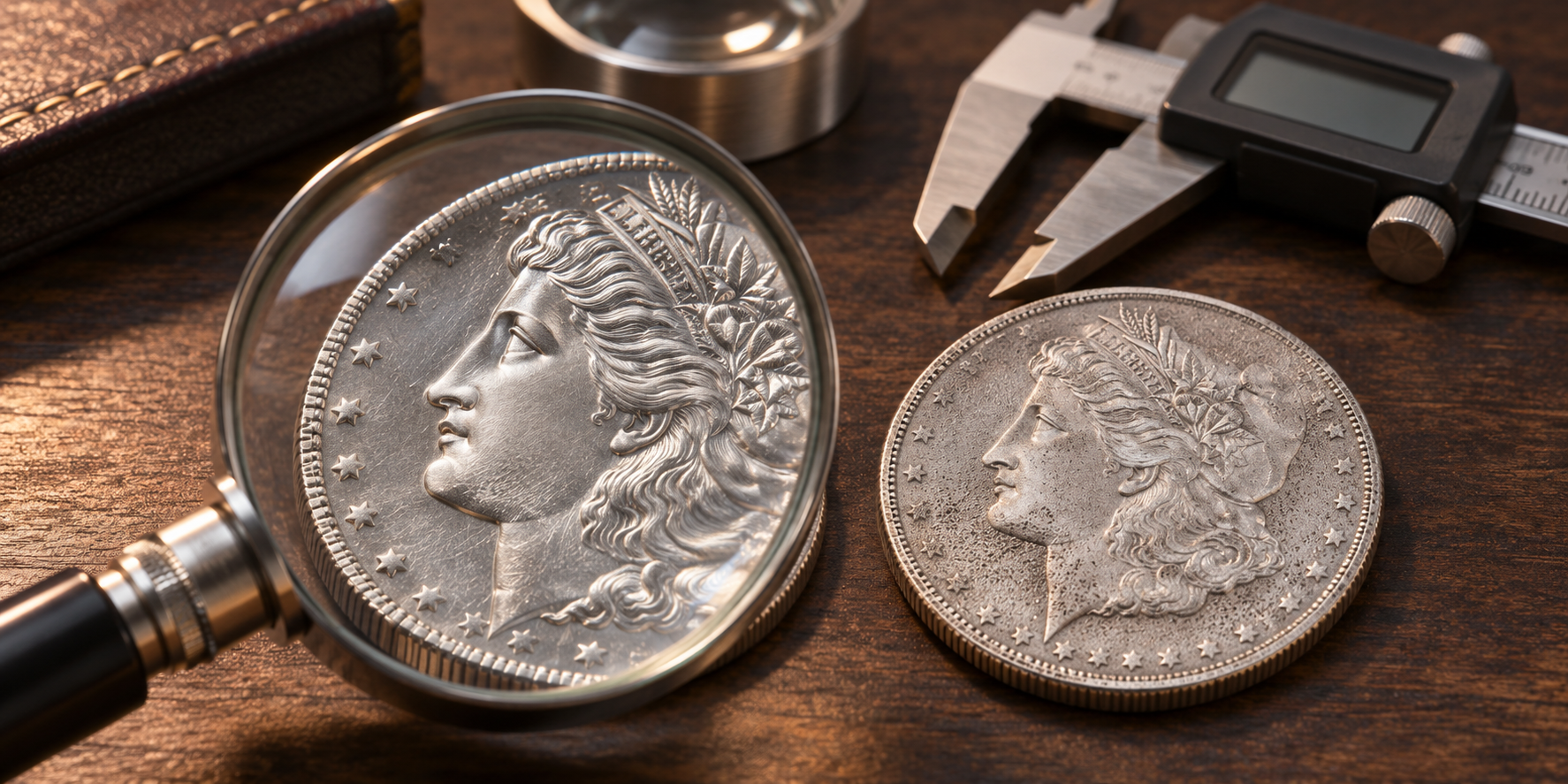
A simple jeweler's loupe, at least 10x-20x magnification, reveals micro-flaws invisible to the naked eye (Beantown Coins has 30x loupes available for under $10).
- Key areas to probe:
- Device and lettering: Genuine coins show crisp, even strikes; fakes have soft hubs or filled letters from electroplating.
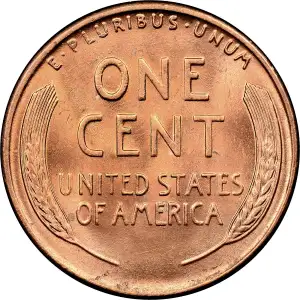
- Die markers: Hunt for mint-specific polish lines or clash marks—e.g., the 1955 Doubled Die's vertical lines left of "ONE CENT" are usually absent or sloppy on replicas.
- Luster and toning: Real coins have cartwheel luster (light fanning across fields); fakes gleam artificially or show unnatural patina.
- Pro Technique: Use a coin under an angled light source to cast shadows on raised elements. For modern issues, check for the U.S. Mint's new 2025 laser-engraved privy marks on Silver Eagles—these microscopic security features (visible only under 30x) are a game-changer against forgeries, to combat rampant replicas.
Step 5: Layer on Advanced Tools for Confidence
Once basics pass, escalate:
- Calipers for dimensions: Digital models ($15) confirm diameter and thickness—e.g., a fake 1804 Draped Bust Dollar might measure 1mm too thick from poor planchet rolling.
- UV light or conductivity tester: Some modern fakes fluoresce oddly under blacklight; sigma metal testers ($200+) verify alloy purity non-destructively.
- When to submit: If doubts linger, slab it with PCGS or NGC—their experts caught a 20% uptick in fakes this year. If you are unsure how to submit to coin graders, Beantown Coins can help with submissions.
Staying Ahead of the Curve: 2025's Counterfeit Hotspots
This year's trends paint a vigilant picture: Beyond bullion fakes and social media hype, watch for "supernote"-style replicas of pre-1933 gold, enabled by 3D printing. The U.S. Mint's laser tech is a beacon of hope, but experts warn it's a cat-and-mouse game—counterfeiters adapt fast. Join communities like the American Numismatic Association forums for real-time alerts, and always verify provenance.
Spotting fakes isn't about paranoia; it's about preserving the joy of the hunt. Start small—practice on low-stakes lots—and soon, you'll trust your instincts like a pro. Got a suspicious coin in your tray? Bring it into Beantown Coins, and we’ll dissect it together. Happy collecting, and may your scales always balance true.
This post is for educational purposes. Always consult professionals for high-value acquisitions.
Beantown Coins & Jewelry
Buy. Sell. Trade. Appraise.